Retatrutide: A Triple Agonist in Metabolic Research
What separates a glucagon-pathway-inclusive analog from the GLP-1 and GLP-1+GIP compounds it follows.
Retatrutide is a synthetic 39-amino acid analog that activates three incretin and counter-regulatory receptors: GLP-1, GIP, and glucagon. It is the newest of the long-acting metabolic research peptides to enter active study and represents a genuinely different pharmacological tool from the GLP-1-only and GLP-1+GIP compounds that came before.
Why add glucagon agonism
Glucagon receptor activation has historically been viewed as opposite to incretin signaling — it raises blood glucose by stimulating hepatic gluconeogenesis. The research interest in pairing glucagon with GLP-1 in a single molecule comes from a body of work suggesting glucagon also drives energy expenditure, lipolysis, and hepatic lipid clearance. When paired with GLP-1's appetite-suppressing and insulin-sensitizing effects, the net metabolic balance can favor weight reduction even with glucagon's blood-sugar-raising contribution.
Retatrutide is the most-studied tool compound for probing this thesis. The molecule's receptor selectivity profile has been characterized in published literature, with strongest activity at GIP receptor, intermediate at GLP-1 receptor, and weakest (but pharmacologically meaningful) at glucagon receptor.
Pharmacokinetics
Like semaglutide and tirzepatide, retatrutide carries a fatty acid side chain for albumin binding and extended half-life. The elimination half-life is reported at approximately 6 days in human pharmacokinetic studies, consistent with once-weekly dosing in research protocols. Time to peak concentration after subcutaneous administration is approximately 24-72 hours.
Steady state is reached after roughly 4 weeks of weekly dosing. For research designs probing acute vs chronic effects, this means crossover studies require ≥6-week washout periods between intervention arms.
Research design considerations
Because retatrutide acts through three receptors simultaneously, attributing observed effects to a specific pathway requires careful experimental design. Co-administration with selective antagonists at each receptor in parallel arms is the standard approach in mechanism-focused publications. Direct comparison to tirzepatide and semaglutide at matched dose-equivalent points is also common.
Researchers conducting head-to-head studies of the three compounds (semaglutide, tirzepatide, retatrutide) benefit from using a single supplier with consistent QC across the three SKUs — different supplier batches introduce confounding purity and counterion variation.
Reconstitution and handling
Retatrutide is typically reconstituted at 5-10 mg/mL in sterile water or bacteriostatic water depending on protocol. Reconstituted material is stable for several weeks under refrigeration; lyophilized vials should be kept at -20°C until use.
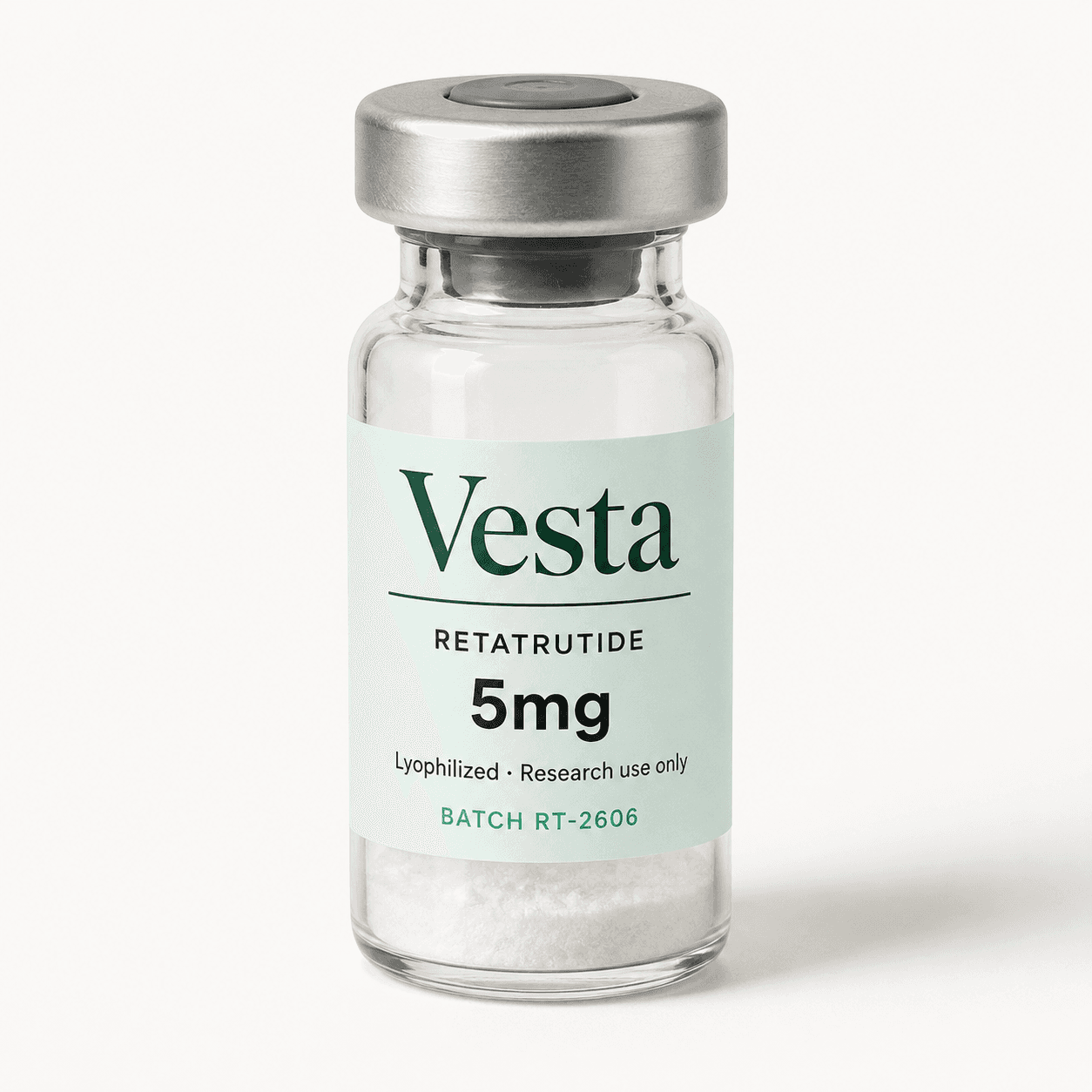
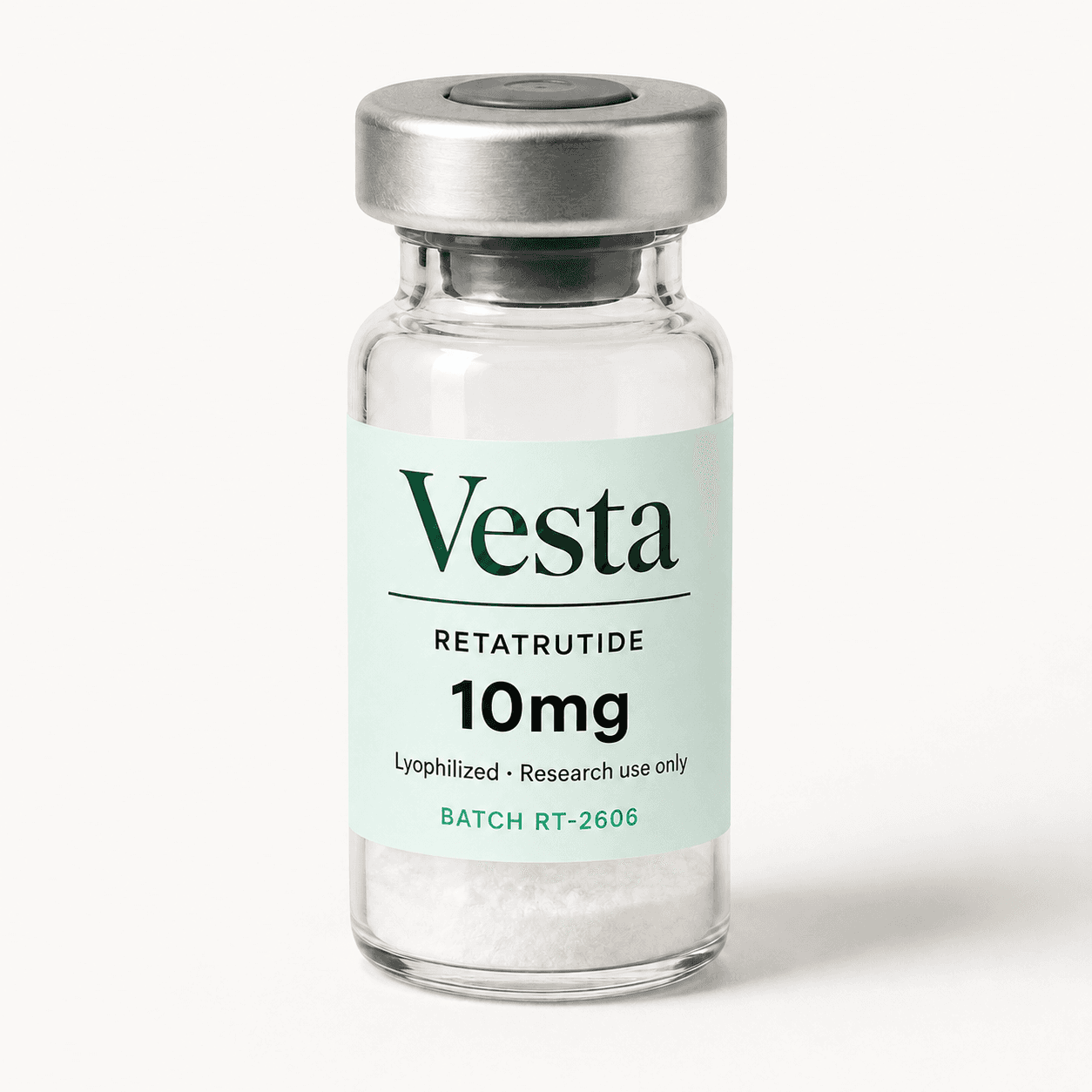
Vesta supplies retatrutide in 5mg and 10mg vials from the same production batch. Each batch carries the molecule-specific HPLC chromatogram and the third-party verification report.