NAD+ in Mitochondrial Research: Coenzyme Function and Research Applications
Why NAD+ levels matter to cellular energetics, and what researchers should know before working with the lyophilized coenzyme.
Nicotinamide adenine dinucleotide (NAD+) is not a peptide, but it appears in research-compound catalogs because of its central role in mitochondrial energetics research, sirtuin pathway studies, and the broader field examining cellular aging. It is the coenzyme involved in over 400 enzymatic reactions across cellular metabolism, and its decline with age is one of the most-cited observations in longevity research.
This article covers what NAD+ does at the molecular level, why levels matter, and the handling considerations specific to NAD+ that differ from typical peptide handling.
What NAD+ does
NAD+ accepts hydride ions during oxidation reactions, becoming NADH. The NAD+/NADH ratio is the cell's primary redox state indicator and is sensed by enzymes that adjust metabolic flux accordingly. The coenzyme is required for glycolysis, the citric acid cycle, fatty acid oxidation, and oxidative phosphorylation — essentially all of cellular energy production.
Beyond its redox role, NAD+ is consumed (not just shuttled) by several enzyme families: the sirtuins (NAD+-dependent deacetylases involved in metabolic regulation), PARPs (poly-ADP-ribose polymerases involved in DNA damage repair), and CD38 (an ecto-enzyme with rising activity in aged tissues). These consuming enzymes mean NAD+ levels can be depleted independent of redox state, which is one of the main research interests in supplementation studies.
Why levels decline with age
Tissue NAD+ concentrations decrease with age in nearly every animal model studied. The mechanism is multifactorial: rising activity of consuming enzymes (CD38 in particular), declining activity of biosynthetic enzymes (NAMPT, the rate-limiting enzyme in the salvage pathway), and accumulated mitochondrial damage that reduces NAD+ recycling efficiency.
The functional consequences observed in aged tissues — reduced mitochondrial respiration, slower DNA damage repair, blunted sirtuin signaling — track with the NAD+ decline, which is the basis for active research into whether restoring NAD+ levels can restore some of these functions in animal models.
Research applications
Direct NAD+ supplementation studies appear in mitochondrial biology, sirtuin pathway research, DNA damage response models, and aging-associated metabolic dysfunction. Alternative precursors (nicotinamide riboside, nicotinamide mononucleotide) are also used, with active comparative research on which precursor most efficiently raises tissue NAD+ levels.
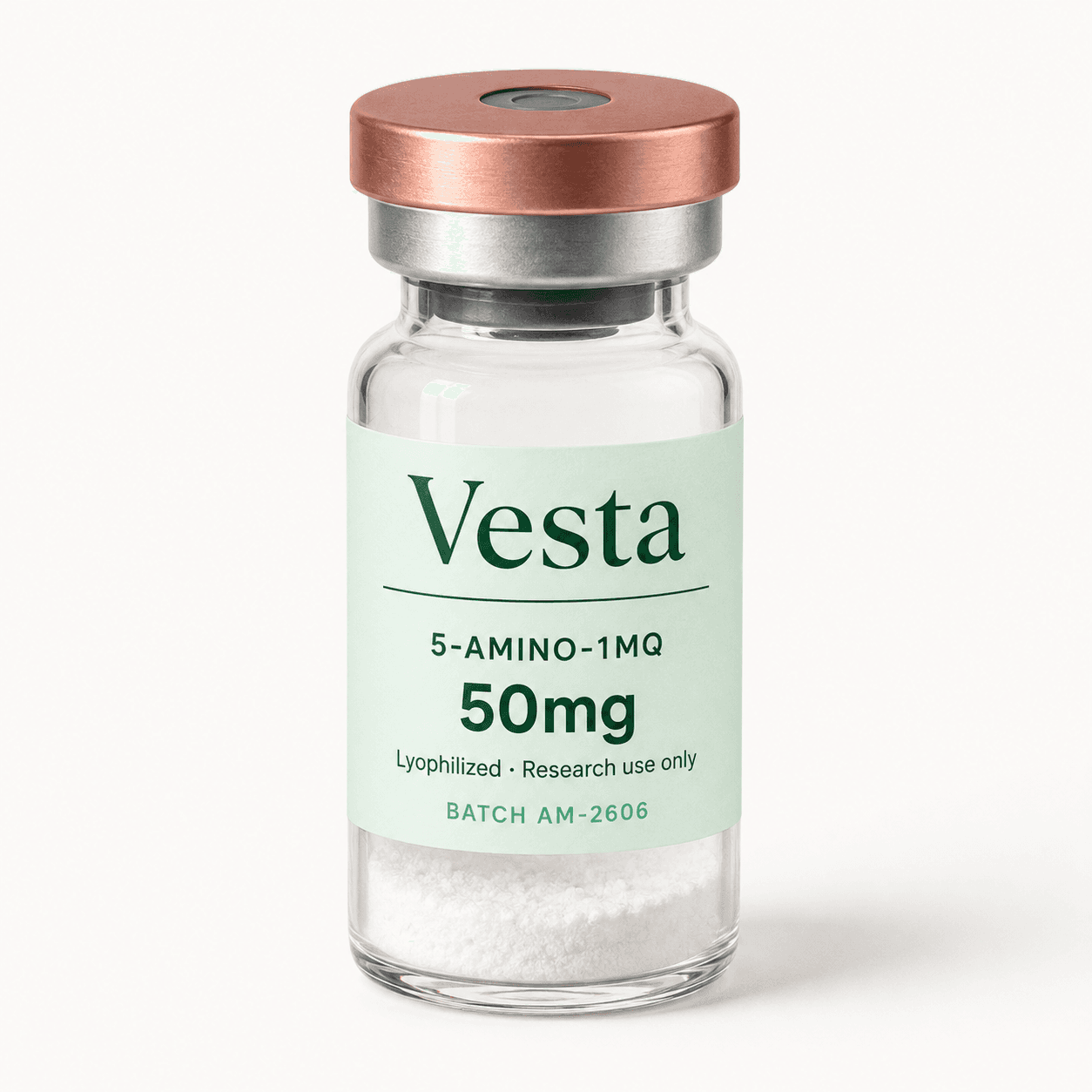
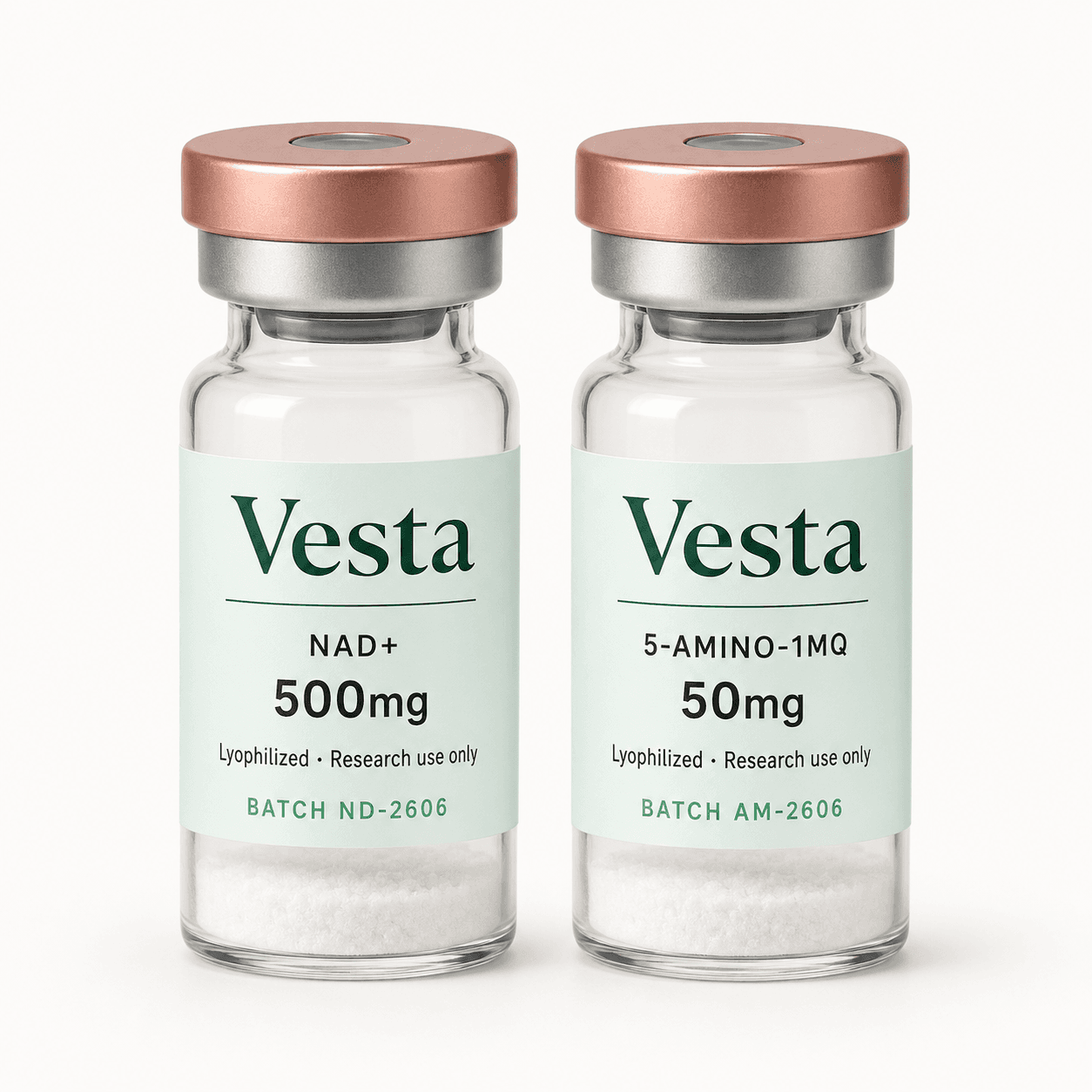
Combination protocols often pair NAD+ administration with NNMT inhibitors such as 5-Amino-1MQ. NNMT (nicotinamide N-methyltransferase) methylates nicotinamide and consumes methyl donors; inhibition is hypothesized to indirectly preserve NAD+ pools and is being studied alongside direct supplementation.
Reconstitution and stability
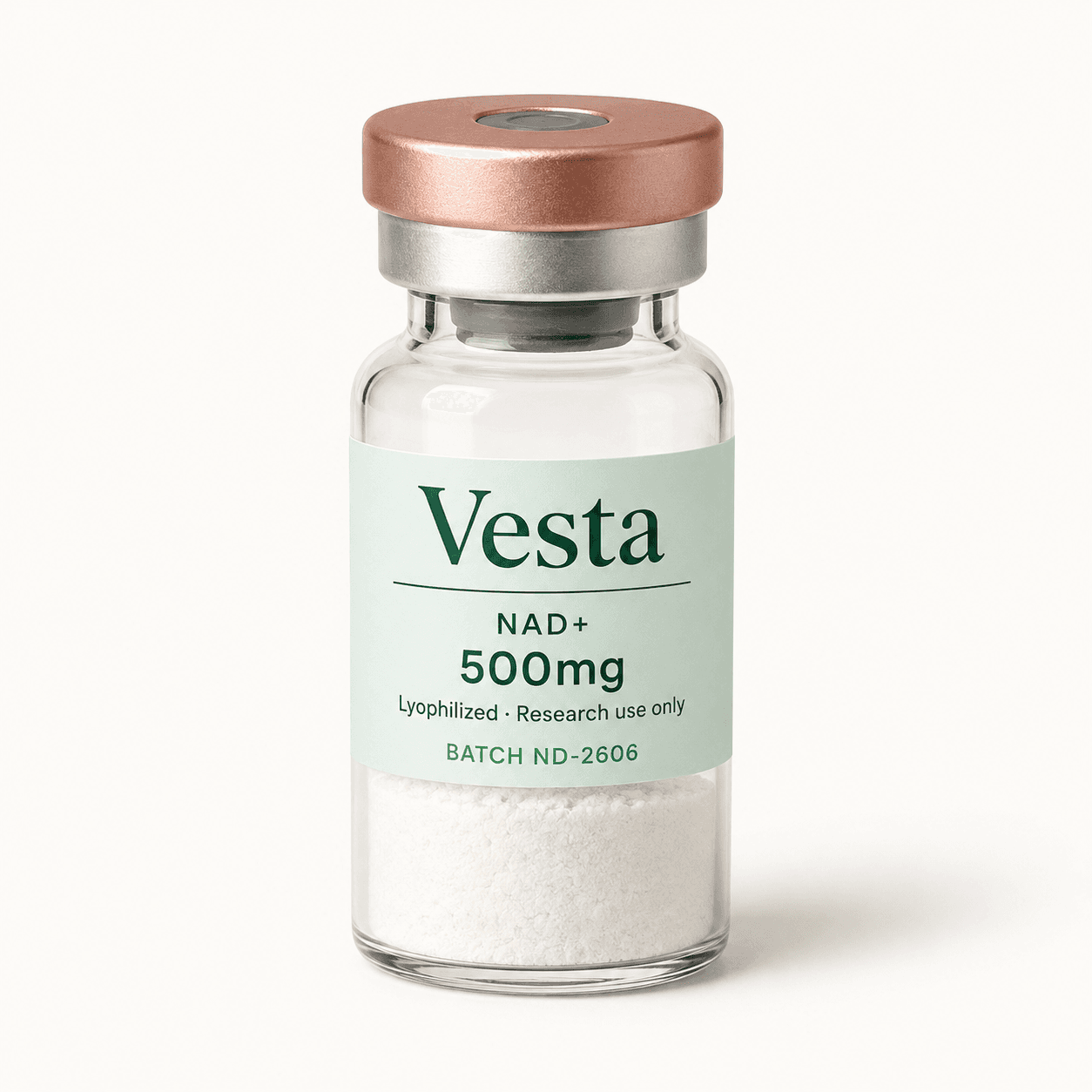
Vesta supplies NAD+ as a lyophilized powder. Standard reconstitution is at 10 mg/mL in sterile water; bacteriostatic water can also be used. Unlike typical research peptides, NAD+ is both air-sensitive and light-sensitive after reconstitution. The reduced form (NADH) and the oxidized form (NAD+) interconvert in solution, and the equilibrium drifts under ambient conditions.
Best practice is to reconstitute immediately before use and to refrigerate any leftover solution in opaque vials, ideally under nitrogen if available. Repeated freeze-thaw cycles degrade the coenzyme; aliquoting fresh reconstituted material is preferable.
Vesta's QC for NAD+
NAD+ is verified by HPLC at ≥99.0% purity with confirmation of the oxidized form, mass-confirmed by LC-MS for the 663.4 g/mol molecular weight, and screened for endotoxin. Because NAD+ is a small molecule rather than a peptide, the HPLC method is adjusted (different column and gradient), but the same ≥99% main-peak cutoff applies. The batch COA ships with every order.