The GHRP Family: GHRP-2, GHRP-6, and Hexarelin in Research
Older-generation ghrelin mimetics, where each one's off-target signaling actually tells you something about ghrelin biology.
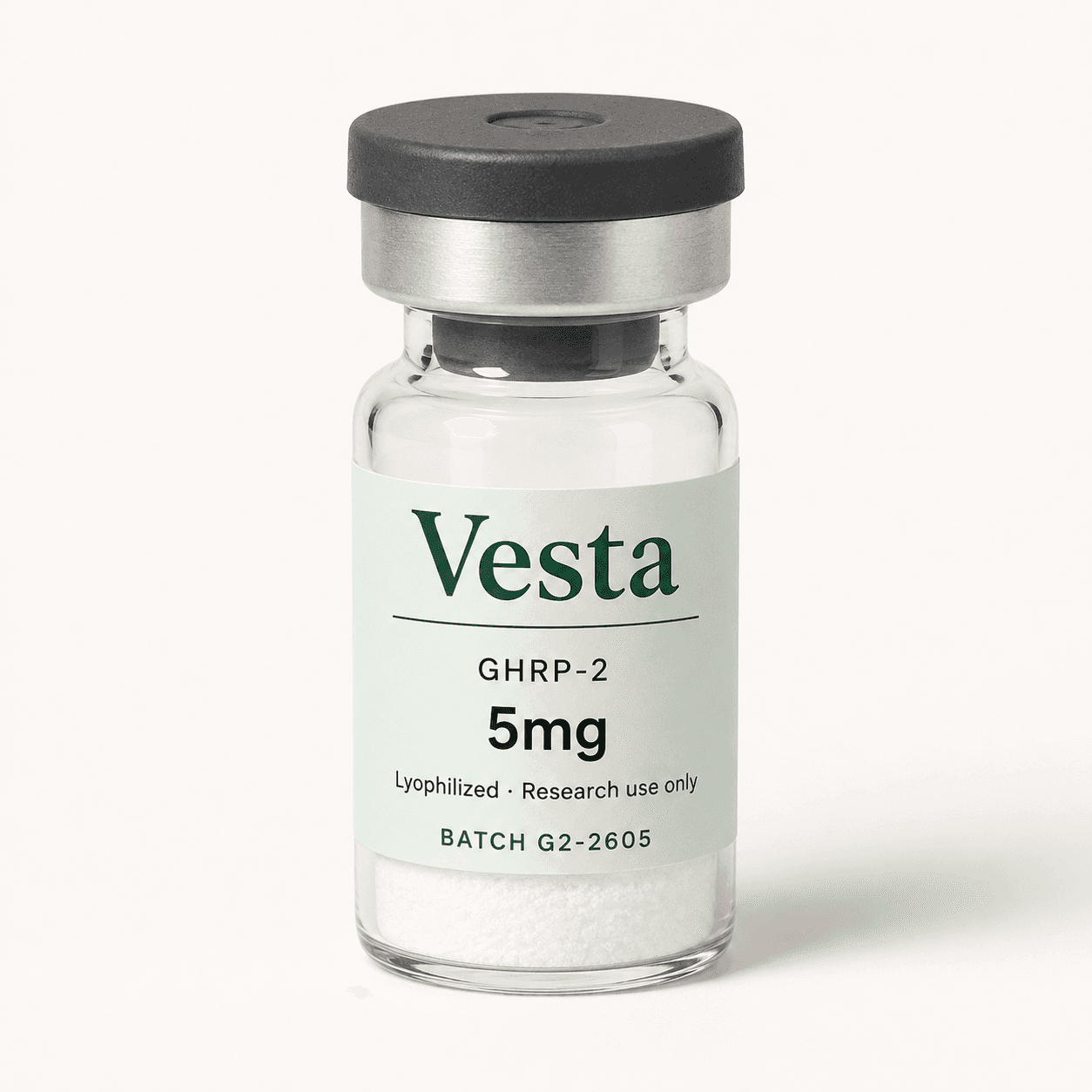
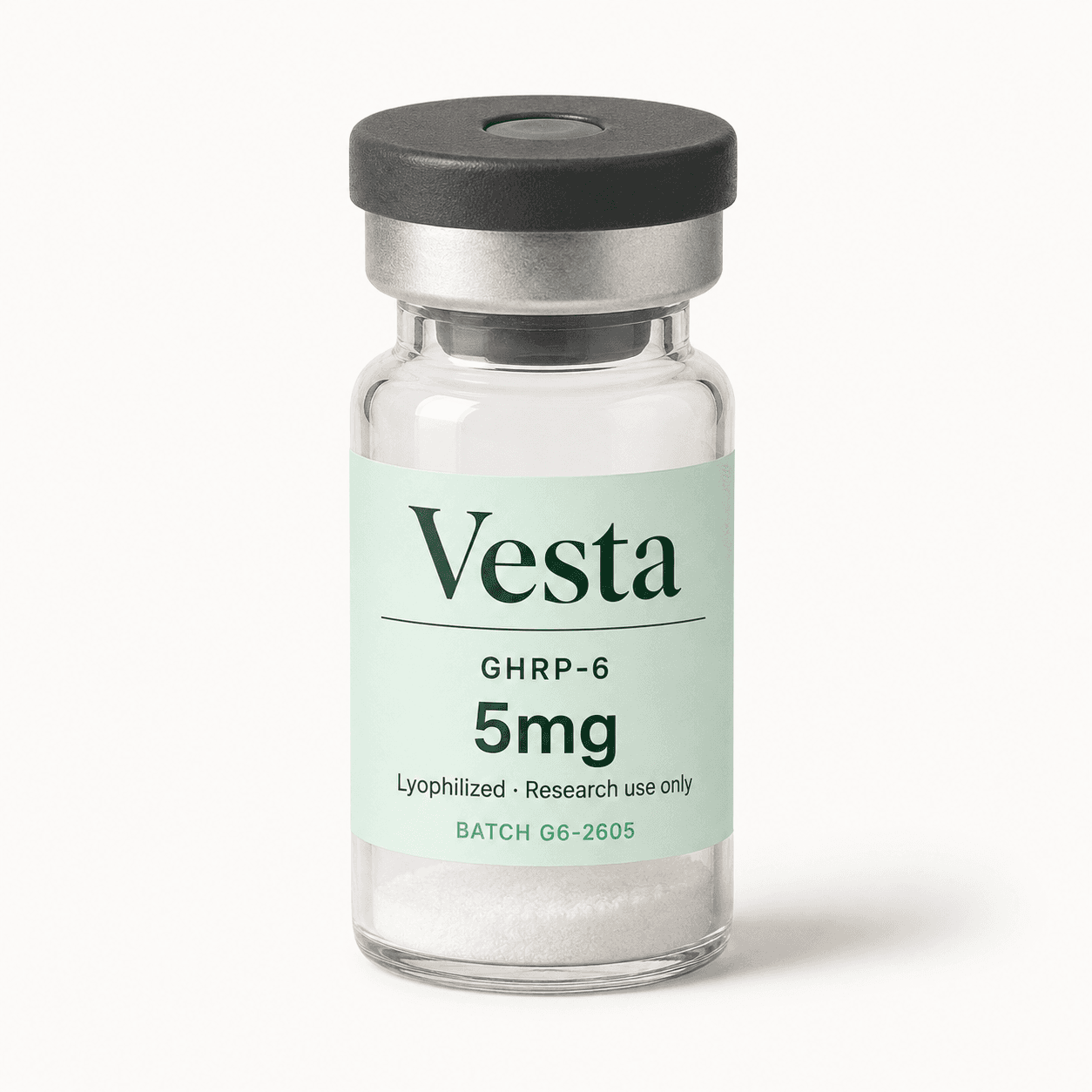
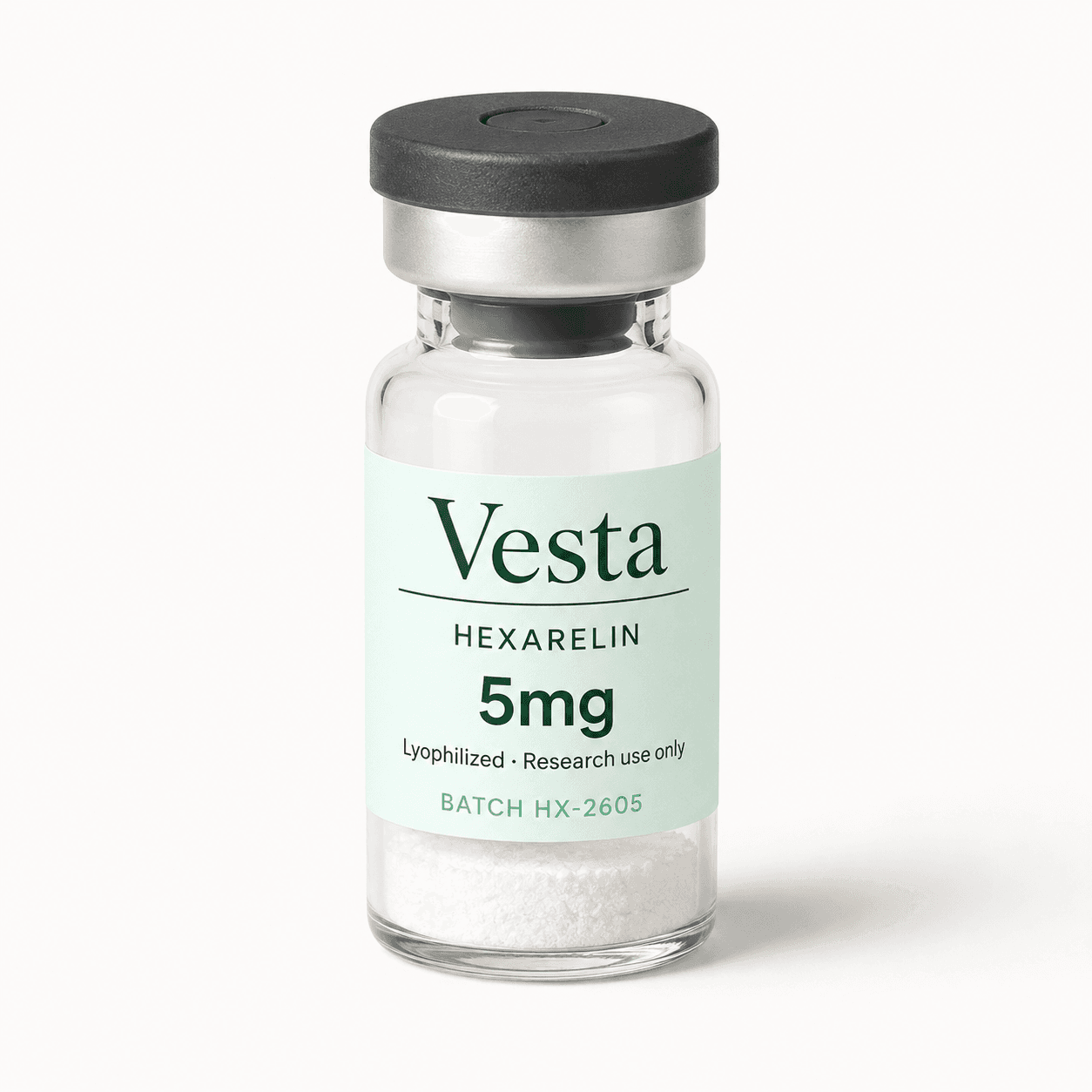
GHRP-2, GHRP-6, and hexarelin are three synthetic hexapeptides developed in the 1980s as ghrelin receptor agonists, well before ipamorelin's introduction shifted the field toward selective agonists. They are still actively studied — partly for legacy comparison data and partly because their less-selective profiles make them useful research tools when the off-target pathways are the actual subject of study.
GHRP-2 — the workhorse
GHRP-2 produces the strongest GH release per dose of the three older ghrelin mimetics, with measured potency 5-10× higher than ipamorelin in published comparative studies. The trade-off is selectivity: GHRP-2 also activates cortisol, prolactin, and ACTH release at the doses used to elicit maximal GH response. For studies where these off-target effects are confounders, ipamorelin is the better tool. For studies where pure ghrelin-receptor pharmacology is the question, GHRP-2 is the strongest stimulus.
Half-life is approximately 30 minutes, supporting two-to-three-times-daily dosing in published protocols. Reconstitution at 1-2 mg/mL in sterile water.
GHRP-6 — the appetite tool
GHRP-6 has a similar structure to GHRP-2 but produces a more pronounced hunger response in research animals — the molecule's most reliable behavioral effect. This makes GHRP-6 the standard tool for studies of ghrelin-pathway appetite regulation specifically, where the hunger signal IS the dependent variable rather than a confounder.
GH release is somewhat weaker than GHRP-2 at matched doses. Cortisol and prolactin elevation is similar to GHRP-2. Half-life and dosing schedule are essentially identical.
Hexarelin — the cardiac-binding outlier
Hexarelin is structurally similar to the GHRP family but with notable additional binding to CD36 receptor in cardiac tissue. This off-target binding has made hexarelin the preferred tool in cardiomyocyte and vascular research, where the question is specifically what the CD36-mediated effects do.
Half-life is approximately 70 minutes — longer than GHRP-2/6, supporting once or twice daily dosing. Potency at ghrelin receptor is roughly comparable to GHRP-2.
When to use which
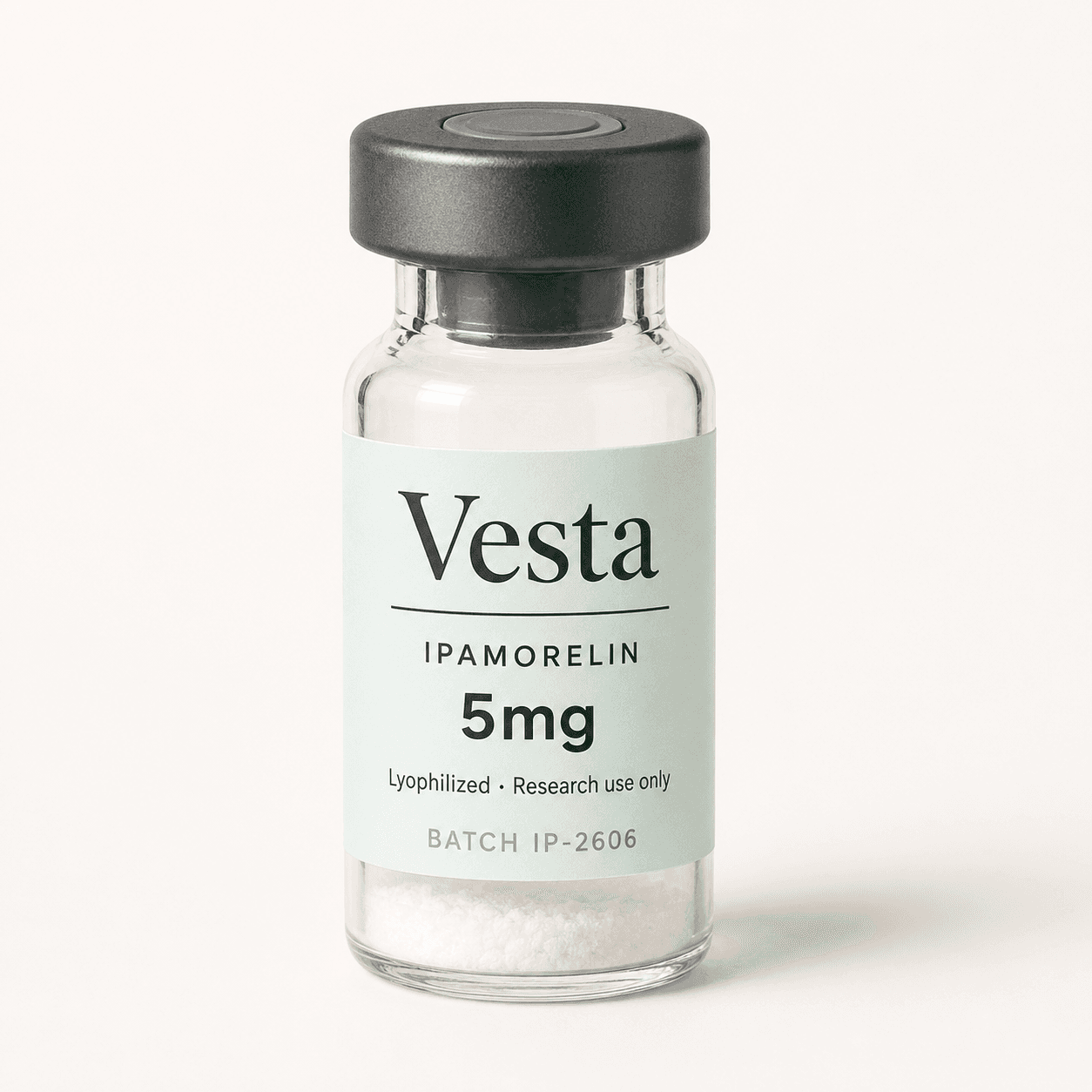
If your protocol calls for clean, selective GH-pathway activation: ipamorelin. If you need maximum GH release per dose and can tolerate cortisol/prolactin elevation: GHRP-2. If your research question is about ghrelin-mediated appetite regulation: GHRP-6. If you are studying cardiac or vascular biology where CD36 signaling matters: hexarelin.
Vesta stocks all four ghrelin mimetics from the same QC pipeline. Comparative panels — running two or three of these compounds in parallel to map selectivity differences — benefit from consistent supplier batches.