BPC-157 and TB-500 in Tissue Repair Research: Why Researchers Study Them Together
Two unrelated peptides with complementary mechanisms in soft-tissue, tendon, and gut repair models.
BPC-157 and TB-500 are two of the most-cited peptides in soft-tissue repair research, and most published animal studies that use either tend to also reference the other. They have no structural similarity and act through entirely different molecular pathways — but the combination consistently produces additive effects in repair models, which is the basis for their frequent pairing in research protocols.
This article briefly covers each molecule's background, the mechanistic basis for combining them, and practical handling considerations for researchers running stacks.
BPC-157 — the gastric protective fragment
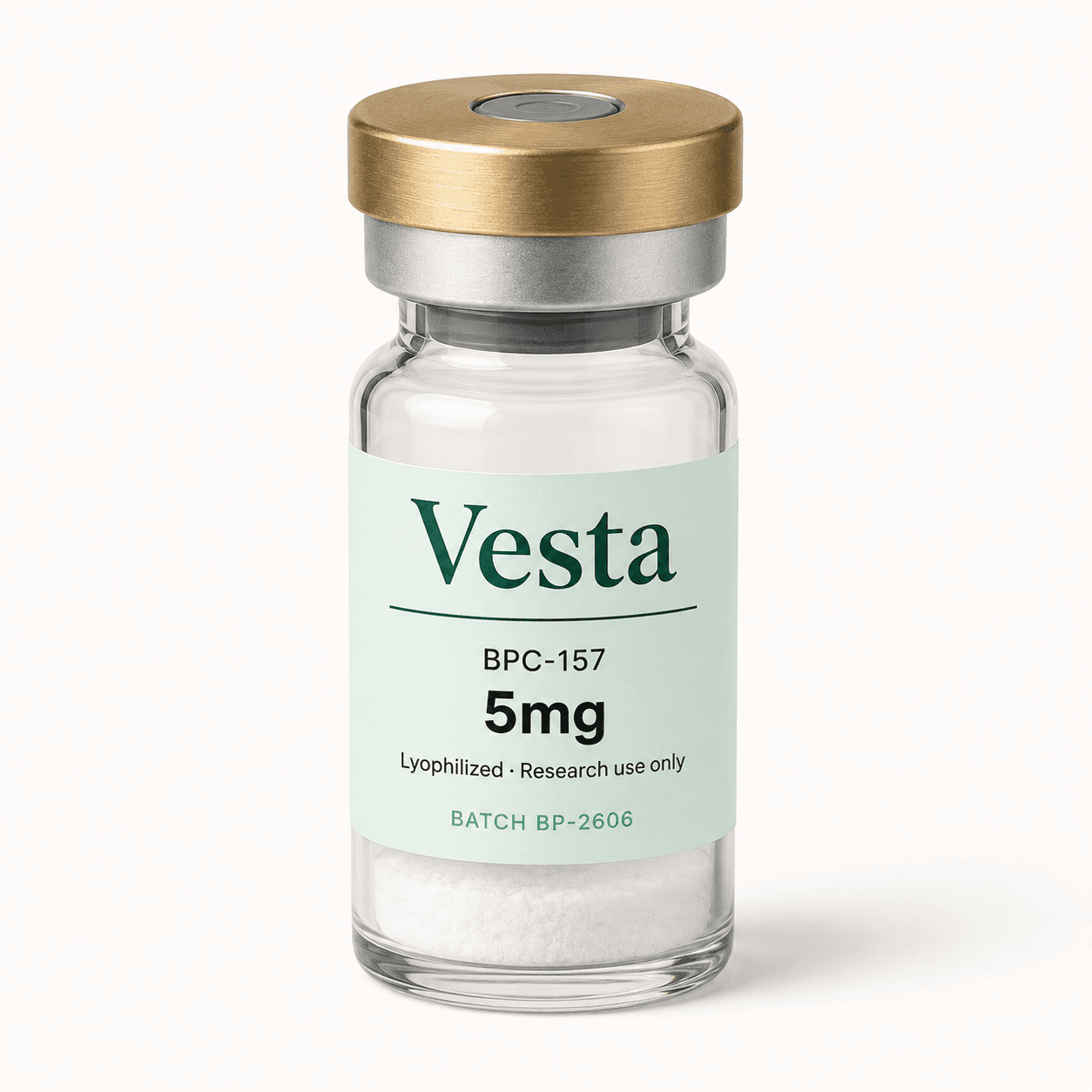
BPC-157 (Body Protection Compound 157) is a synthetic 15-amino acid sequence corresponding to a section of human gastric juice protein. The name reflects its original identification: researchers studying gastric mucosal protective factors isolated a fragment with broad protective effects beyond the stomach, particularly in tendon, ligament, and vascular injury models.
Mechanistically, BPC-157 is associated with upregulation of growth factors and angiogenesis markers (VEGF, FGF) and modulation of nitric oxide signaling, though the precise receptor target remains an active research question. Its plasma half-life is short (~30 minutes), which is why most published protocols use multiple doses per day rather than single-dose-per-day designs.
TB-500 — the thymosin beta-4 fragment
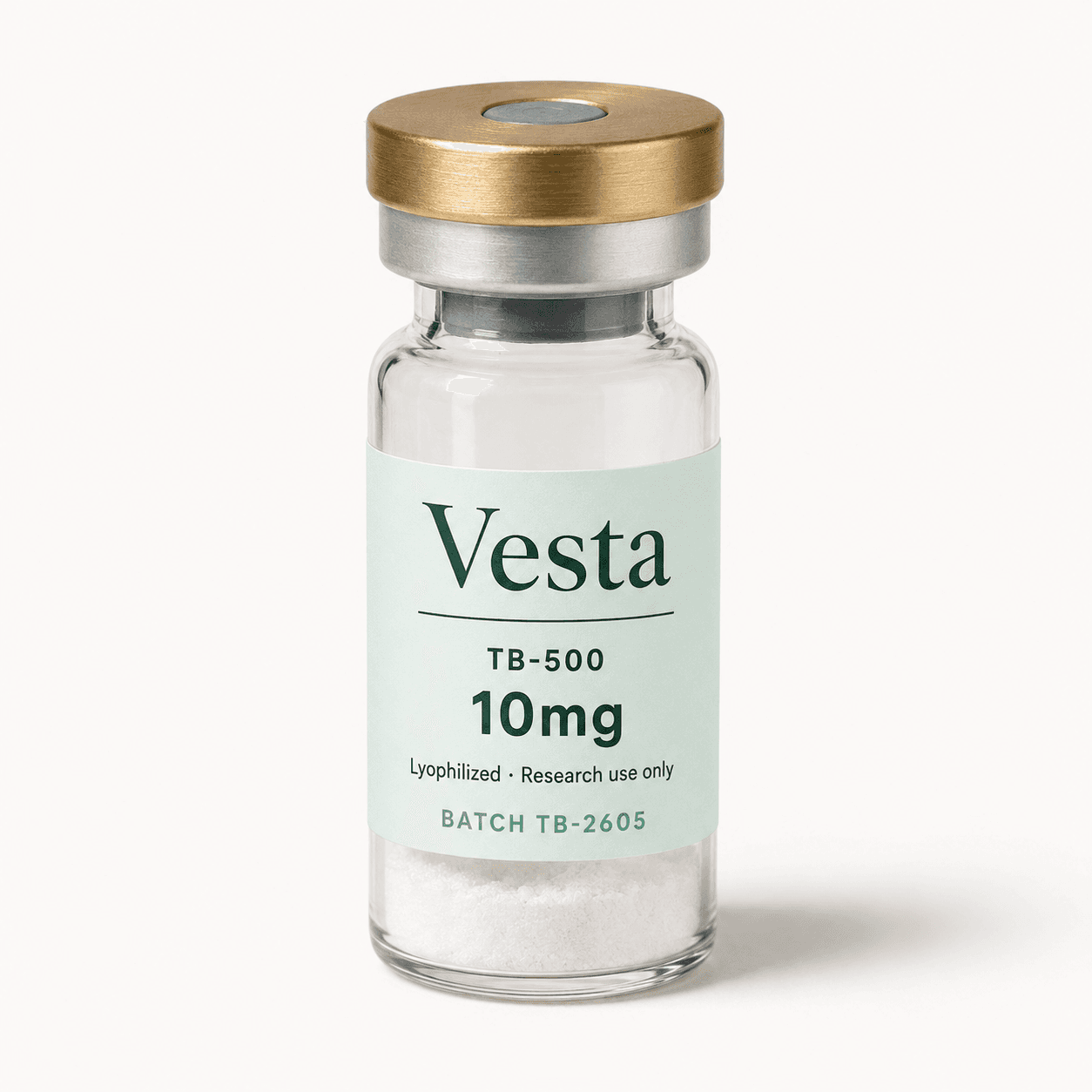
TB-500 is a synthetic peptide corresponding to the actin-binding region of thymosin beta-4 (specifically the LKKTETQ sequence). Thymosin beta-4 itself is a 43-amino acid protein with established roles in actin sequestration, cell migration, and tissue repair. The shorter TB-500 fragment retains key actin-binding activity while being more synthetically tractable and showing better in-vivo stability than full-length thymosin beta-4.
Research applications span soft-tissue repair, cardiac ischemia/reperfusion models, and corneal wound healing. TB-500's plasma half-life is in the 2-3 hour range — longer than BPC-157 — which means less frequent dosing in repair-focused protocols.
Why the pairing works in repair models
BPC-157 and TB-500 act through non-overlapping mechanisms — BPC-157 primarily on local growth factor expression and angiogenesis, TB-500 primarily on cell migration and actin dynamics. In tissue repair, both processes are required: new vessels must form to supply the repair site, and cells (fibroblasts, satellite cells, endothelial cells) must migrate into the injury bed. Each peptide accelerates one limb of this process; together they show additive effects in published repair-time and tensile-strength measurements.
The pairing is most studied in tendon and ligament repair animal models, where the combination is administered locally or peri-lesion. Gut research designs using BPC-157 more often run it alone, since the gastric protective effects show diminishing returns from TB-500 addition.
Reconstitution and dosing for the stack
BPC-157 is typically reconstituted at 2.5-5 mg/mL in sterile or bacteriostatic water. TB-500 is typically reconstituted at 2-5 mg/mL in the same diluent. The two compounds should be kept in separate vials rather than mixed pre-administration, both because their stability profiles differ and because most published protocols dose them on different schedules.
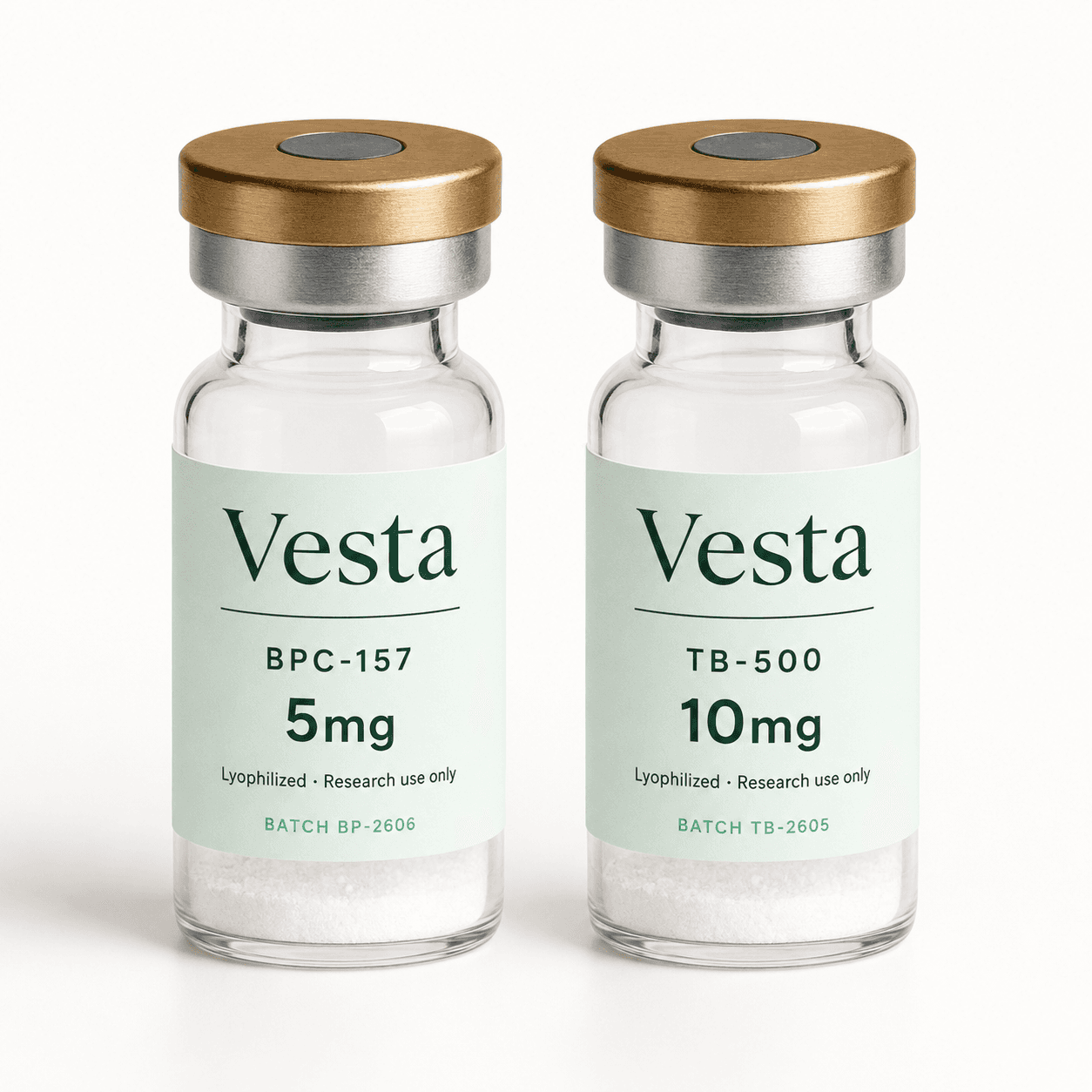
Vesta supplies the pair as a bundled stack (BPC-157 5mg + TB-500 10mg) with separate vials, each with its own production batch COA. A reconstitution math card is included so researchers can quickly compute volumes for common protocol concentrations without recalculating each time.
Vesta's QC approach for both
Both BPC-157 and TB-500 are HPLC-verified above 99% main-peak purity, mass-confirmed by LC-MS, LAL-screened for endotoxin, and re-tested by an independent US-based third-party lab. The COAs for both vials in the stack are bundled with the shipment.